Skip to content

Underground stormwater tanks for retention and reuse

A stormwater retention tank collects runoff from a site and keeps it, so the water can be reused for irrigation, toilet flushing or wash-down instead of going straight to the drain. Less water leaves the site, and less mains water is used.

Mullaly makes underground fibreglass stormwater tanks from 5,000L up to 150,000L for some applications, single or double wall. Bigger volumes are made up of several tanks joined with PVC or fibreglass pipework. The tanks are used on commercial and industrial developments, subdivisions, council and utility stormwater works, and remote and mining sites.

The tank goes underground, so the ground above stays usable for landscaping, paths and car parks. Tell us what will be above the tank when you ask for a quote.
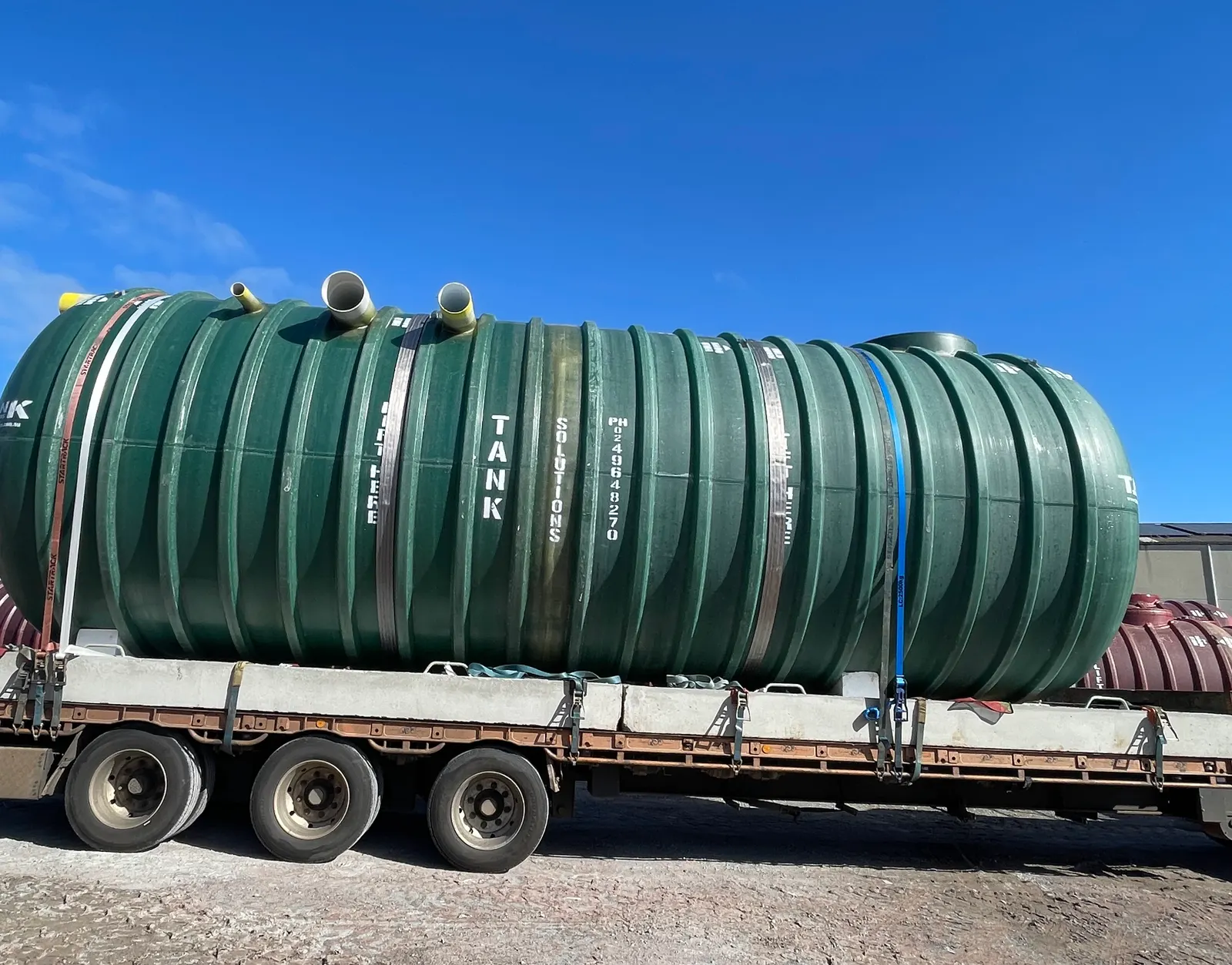
Large ribbed fibreglass water storage tank strapped to a trailer for delivery to Norlane, Victoria

Retention and detention: the difference

The two words are often mixed up, and councils treat them differently.

  • Retention keeps the water. The tank fills in a storm and the water stays until it is used on site. The aim is reuse and a smaller volume of runoff.
  • Detention holds the water for a short time. The tank fills during a storm and empties slowly through a controlled outlet, so the site does not overload the drainage system downstream. The aim is a lower peak flow, and the tank is meant to be empty before the next storm. This is often called on-site detention, or OSD.

A site may need one, the other or both. Where the council allows it, one tank can hold a retention volume at the bottom for reuse, with a detention volume above it that drains away after each storm. The project's civil or hydraulic engineer works out which the site needs from the council's rules.

Mullaly fibreglass tanks are used for both stormwater detention and retention. Our industrial water tanks page covers underground detention tanks.

Retention and detention tanks compared

Retention tankDetention tank
PurposeStore runoff for reuse on siteSlow the release of runoff to the drainage system
Water level between stormsStays full or part full until usedDrains down to empty
OutletPump or draw-off to the reuse system, plus an overflowControlled outlet sized by the engineer, plus an overflow
Typical uses of the waterIrrigation, toilet flushing, wash-downNone. The water is released
Main design figureVolume needed to meet the reuse demandSite storage volume and the allowed discharge rate set by council
Mullaly tankUnderground FRP tank, 5,000L to 150,000LUnderground FRP tank, 5,000L to 150,000L

Rules differ between councils. Check the development control plan or stormwater policy for the site, or ask the project engineer.

Stormwater harvesting and treatment

Runoff from car parks, roads and hardstand carries more sediment, litter and oil than water from a roof. Most stormwater harvesting systems screen or settle the water before it reaches the tank, and treat it again before reuse. How much treatment is needed depends on what the water is used for, and the designer sets it.

Where runoff comes from a refuelling area, workshop or wash bay and may carry fuel or oil, run it through an Aquator oil water separator before it reaches the tank or the drain.

If only roof water is being collected, see underground rainwater tanks. Roof water is cleaner and usually needs less treatment.

Stormwater tank sizes and specifications

ItemDetail
Single tank capacity5,000L to 150,000L (the largest sizes for some applications)
Larger volumesSeveral tanks connected with PVC or fibreglass pipework
DiameterUp to 3.28m
WallSingle wall or double wall
InstallationUnderground, and select above-ground installations
StructureIntegral, high-profile fibreglass ribs, designed for the soil and surface loads on each site. Not limited by the water table
MaterialFibreglass (FRP) with resin that contains no fillers. No protective lining or coating needed
AccessoriesAccess risers, manways, inspection ports, FRP inspection ladders, baffles, and inlet, outlet, overflow and vent points

Council figures are often in cubic metres. One cubic metre is 1,000L, so a 60m³ retention volume is 60,000L. For tanks of 20,000L and over, see our large water tanks page.

Large water tanks

Why a fibreglass stormwater tank

Ground above stays usable

The tank goes underground, leaving the surface free for landscaping, paths and car parks.

Not limited by the water table

Integral fibreglass ribs give the tank its strength and are designed for the soil and surface loads on each site.

Watertight

Designed to be 100% watertight, so stored water stays in and groundwater stays out.

Corrosion proof

Fibreglass does not rust and resists the surrounding soil and the stored water. No lining or coating needed.

No ongoing tank maintenance

The tank structure needs no ongoing maintenance or inspections. Screens, pits and pumps in the system still need regular cleaning.

Light to transport

A large-capacity tank ships on one truck bed and can be installed in tight footprints and remote places.

Why fibreglass (FRP)

Installing an underground stormwater tank

Each tank comes with Mullaly's installation manual. Because the tanks are light for their size, a large-capacity tank ships on one truck bed and suits tight sites between buildings and boundaries, and remote locations. They are not limited by the water table, so they can go into sites with high groundwater; give us the groundwater level when you ask for a quote.

Where the tank cannot drain or overflow to the council system by gravity, pair it with a stormwater pump station, made in one piece from the same fibreglass, so the tank and pump station come from one supplier. If you are weighing up materials, see fibreglass vs concrete water tanks. For the full water tank range, see underground water tanks.

Mullaly is part of the Tank Solutions group, which also lists these tanks on its own site: Tank Solutions stormwater tanks.

Two fibreglass water storage tanks set side by side in a shored excavation at Gympie

Stormwater retention tank questions

What is a stormwater retention tank?

A tank that collects stormwater runoff and keeps it on site for reuse, such as irrigation, toilet flushing or wash-down. It reduces the volume of water leaving the site.

What is the difference between retention and detention?

A retention tank keeps the water for reuse. A detention tank holds it during a storm and releases it slowly through a controlled outlet, then drains empty. Some councils allow one tank with a retention volume below a detention volume.

What size stormwater tank do I need?

The volume comes from the reuse demand, the catchment and the council's rules, and is worked out by your civil or hydraulic engineer. Send us the volume and levels from the design and we will recommend one tank or a set of connected tanks.

How big can a Mullaly stormwater tank be?

Single tanks run from 5,000L to 150,000L for some applications, in diameters up to 3.28m. Larger volumes are made up of several tanks connected with PVC or fibreglass pipework.

Can the tank go in high groundwater?

Yes. Mullaly tanks are not limited by the water table. Their integral fibreglass ribs are designed for the soil and surface loads on each site.

Does stormwater need treating before it goes in the tank?

Usually. Runoff from paved areas carries sediment, litter and sometimes oil, so most systems screen it first. Where fuel or oil is likely, an oil water separator should treat the water before it reaches the tank.

Does a retention tank need a pump?

A pump is needed to deliver the water for reuse. If the tank also has to be emptied to the drainage system, a Mullaly stormwater pump station can do that.

Download the water storage tank brochure

Enter your email and the brochure opens straight away. We will also email you the link.

Request a quote for a stormwater tank

Send us the storage volume, inlet and outlet levels and site details from your engineer's design. We reply to every enquiry within 2 business days.

Or call 02 4964 8270 or email sales@mullaly.com.au