
Fibreglass Pump Stations
A Mullaly fibreglass pump station is made in one piece to your project specification, so installation on site is quick and cost-effective.
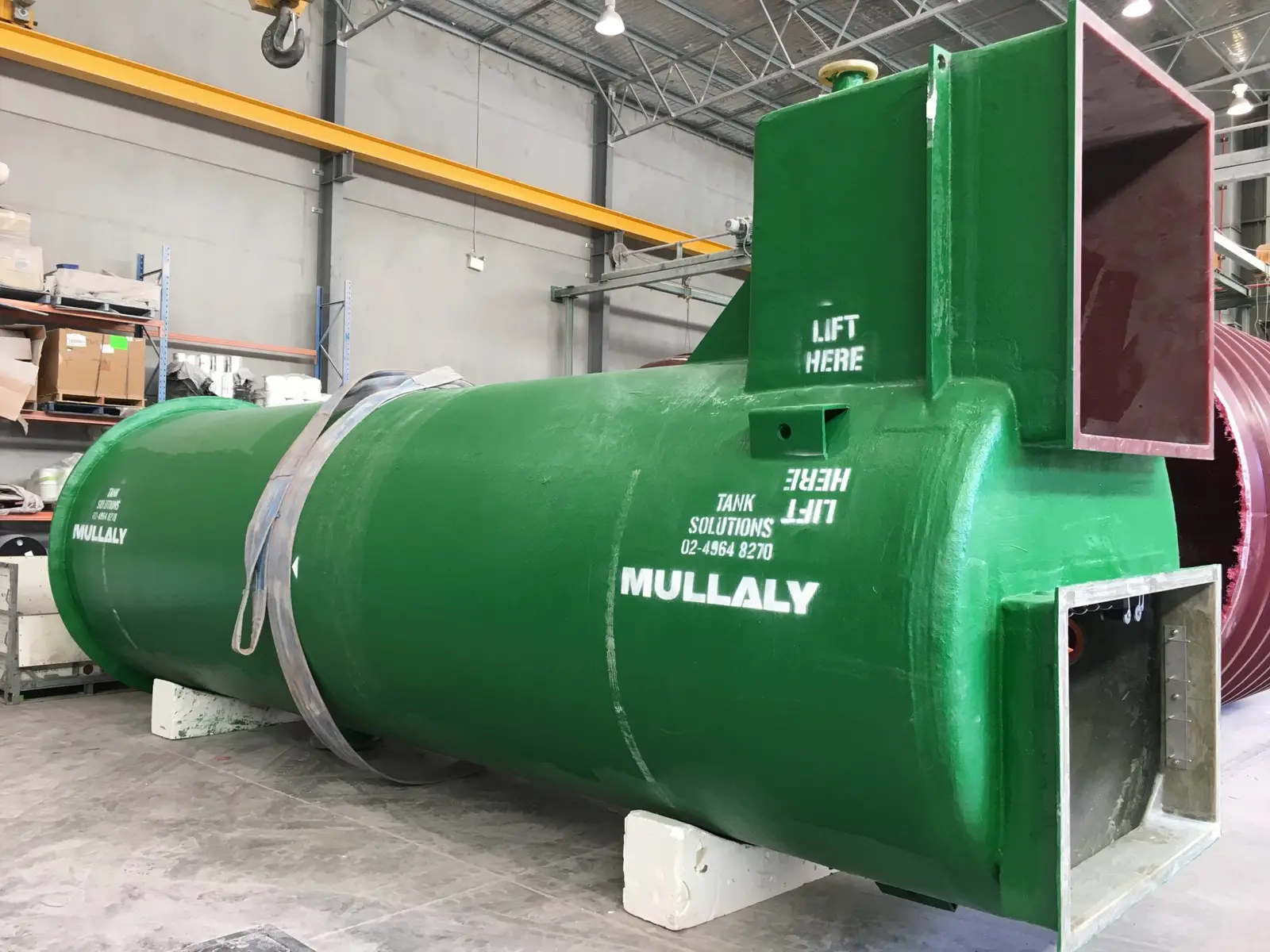
A Mullaly fibreglass pump station is manufactured as a one-piece construction to the exact specifications of your project, for a quick and cost-effective installation on site. Each one is delivered pre-packaged and ready for placement, with the pedestals, guide rails and pipework fitted to the approved project drawings. Our prefabricated GRP (fibreglass) pump stations arrive in one piece, fitted out in the factory, so there are no segments to join or seal on site.
The integral valve chamber shortens excavation, reduces disruption to local flora and fauna and needs less space in the overall design, so the environmental footprint is smaller.
Mullaly FRP (fibre reinforced plastic) pump stations are engineered for sewage and water. They are independently verified to withstand internal and external loads, for a long design life. Mullaly FRP sewage pump stations are WSAA appraised (PA 1020 Issue 4, current to 2031) and designed to WSA 04-2022.
A precast concrete pump station is made in sections that are joined and sealed on site, and an in situ station is poured in the hole. A Mullaly pump station arrives as one finished structure. Its vinyl ester resin resists the corrosive chemicals in sewage that attack concrete, so no internal coating or liner is needed. Read how fibreglass and precast concrete pump stations compare.
Each pump station can be a combo or a separate fibreglass wet well and valve pit or access chamber. For a specific use, see sewage pump stations and stormwater pump stations, and where runoff has to be held on site, stormwater detention tanks.
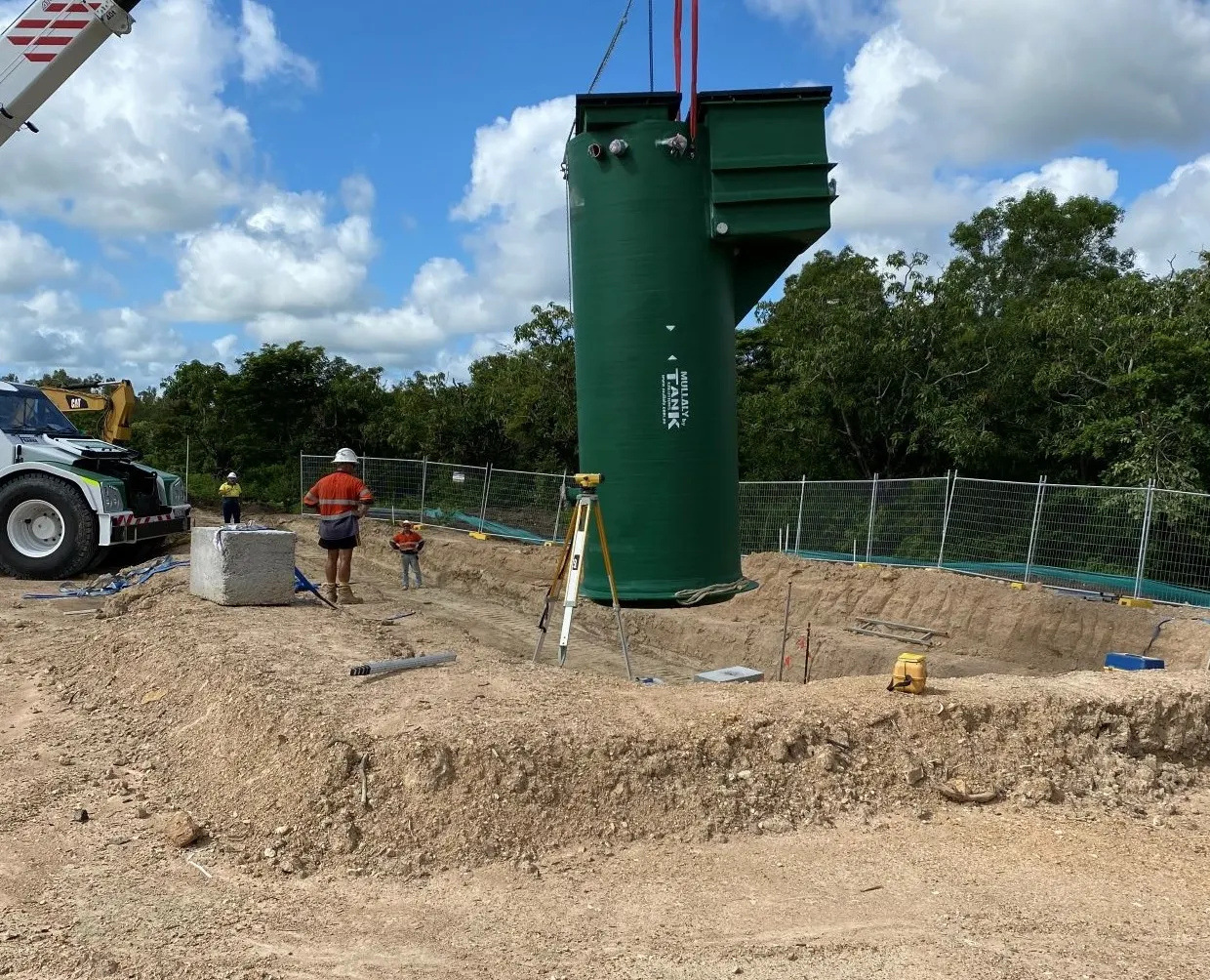
FRP pump station uses
Mullaly FRP pump stations are designed to hold water and wastewater (sewage) and suit a wide range of applications, including:
- Sewage treatment plants
- Subdivisions
- Commercial and industrial complexes
- Hospitals
- Mining and construction sites
- Camping and caravan parks
- Motels and hotels
- Shopping centres
- Sporting facilities
- Schools
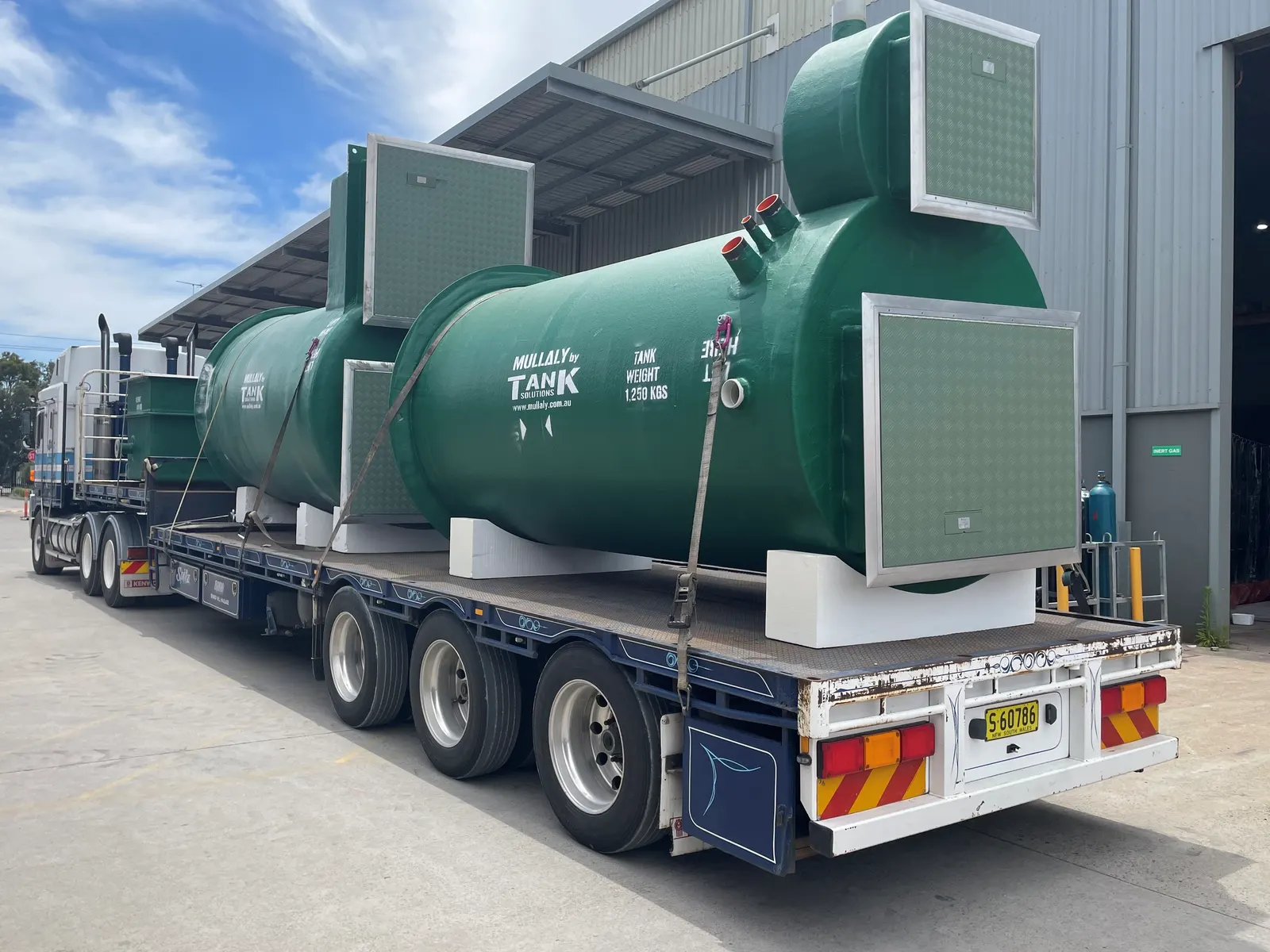
Sewage and stormwater pump stations
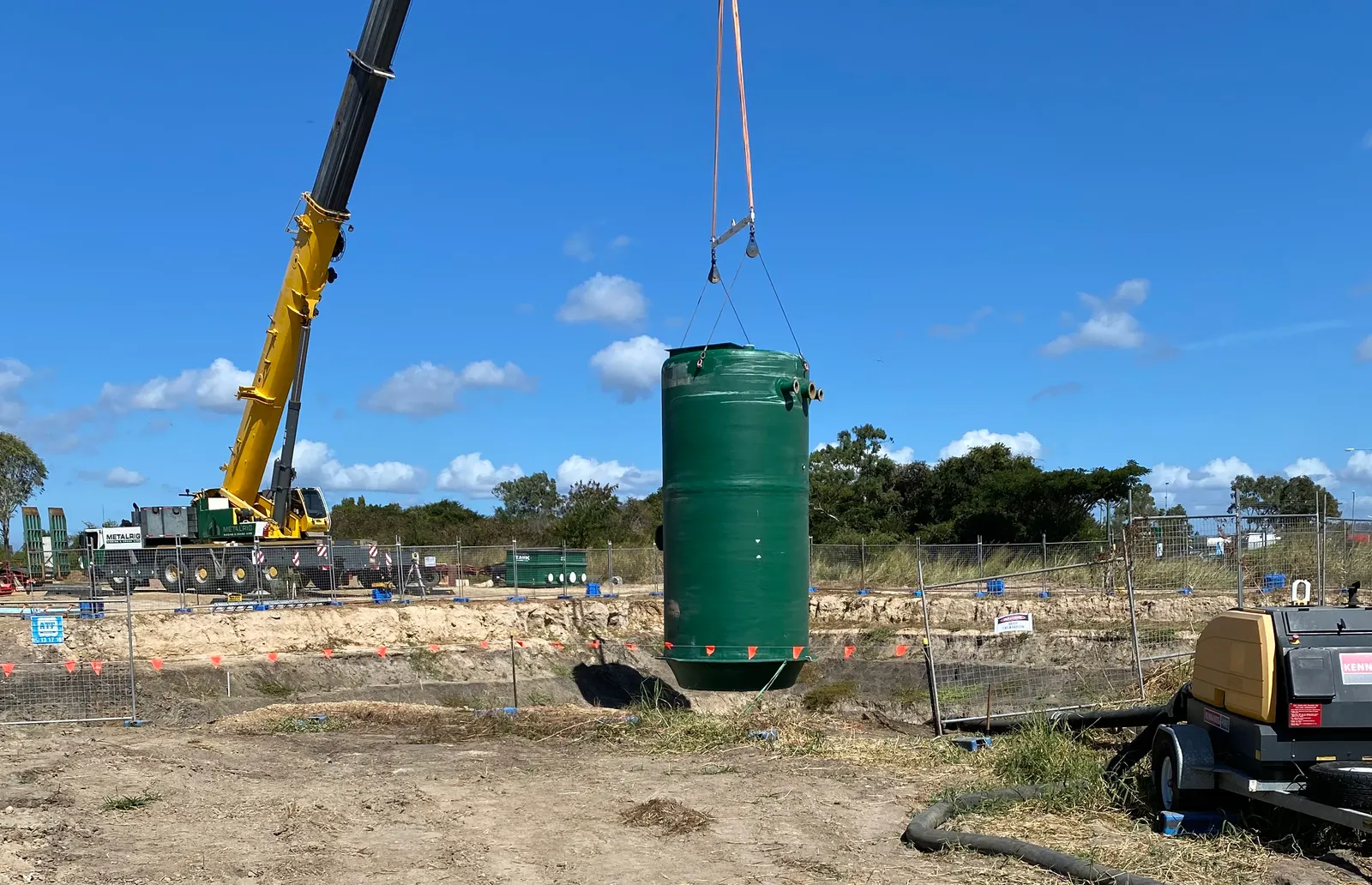
Sewage pump stations
WSAA appraised wet wells and valve pits for councils, utilities and developers.
View sewage pump stations
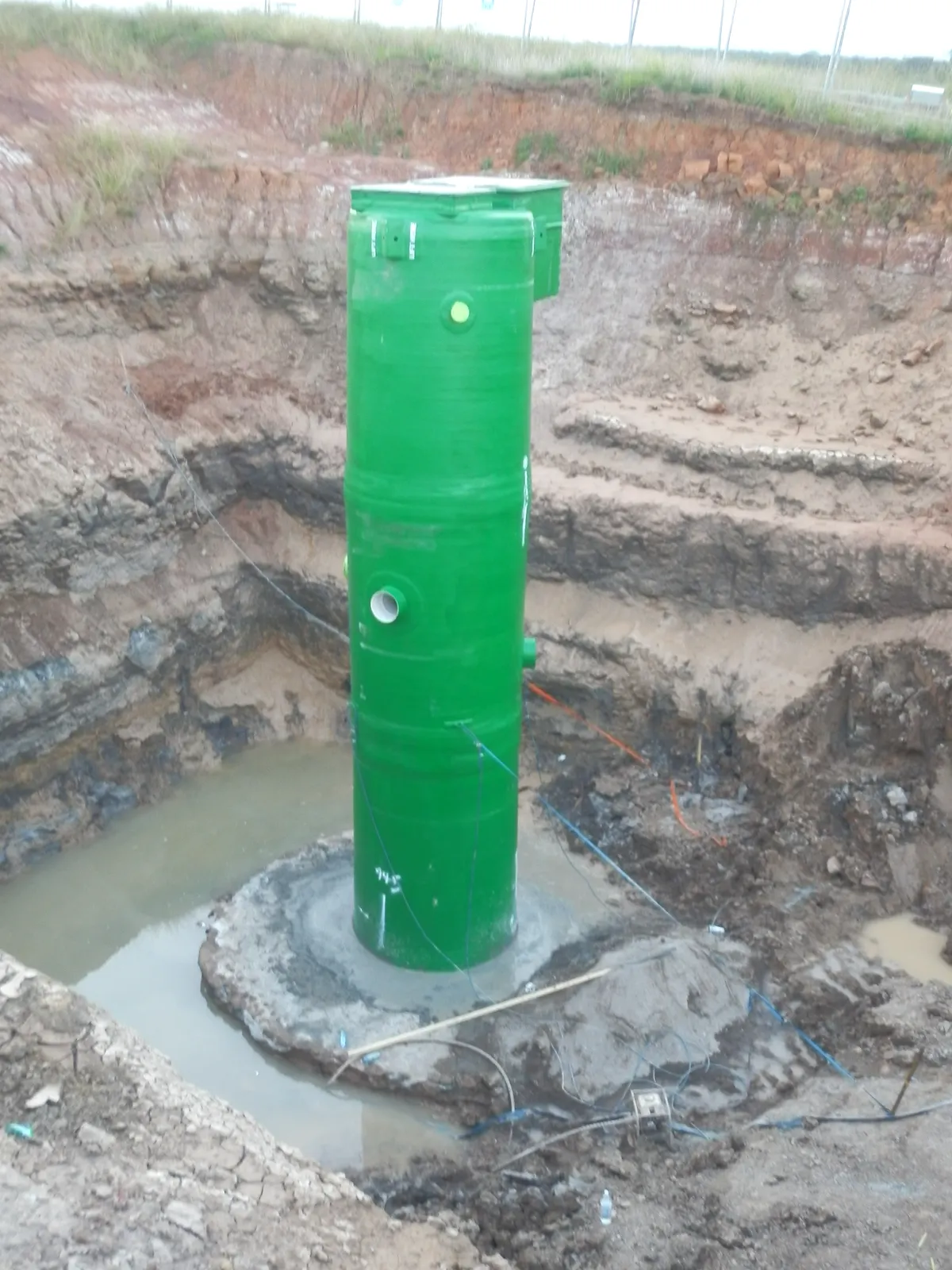
Stormwater pump stations
Pump pits and pump stations for subdivisions, basements, roads and commercial sites.
View stormwater pump stations
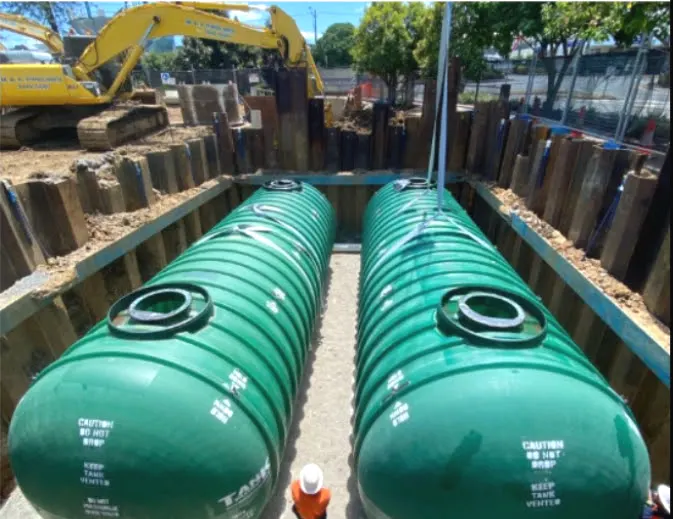
Emergency storage tanks
Underground fibreglass tanks for overflow and emergency storage at pump stations.
View underground tanks
Configurations and additional features
Mullaly FRP pump stations can be configured with a range of additional features to suit your project.
Combo pump station
The wet well and valve pit are built as one unit. Most projects suit a combo. The integral valve chamber shortens excavation and needs less space in the overall design, and because the two are one structure there is no differential settlement between the wet well and the valve pit.
Wet wells
A separate wet well holds the submersible pump or pumps for the wastewater system. It is used where a larger diameter is needed, and gives more flexibility in how the system is laid out.
Valve pits
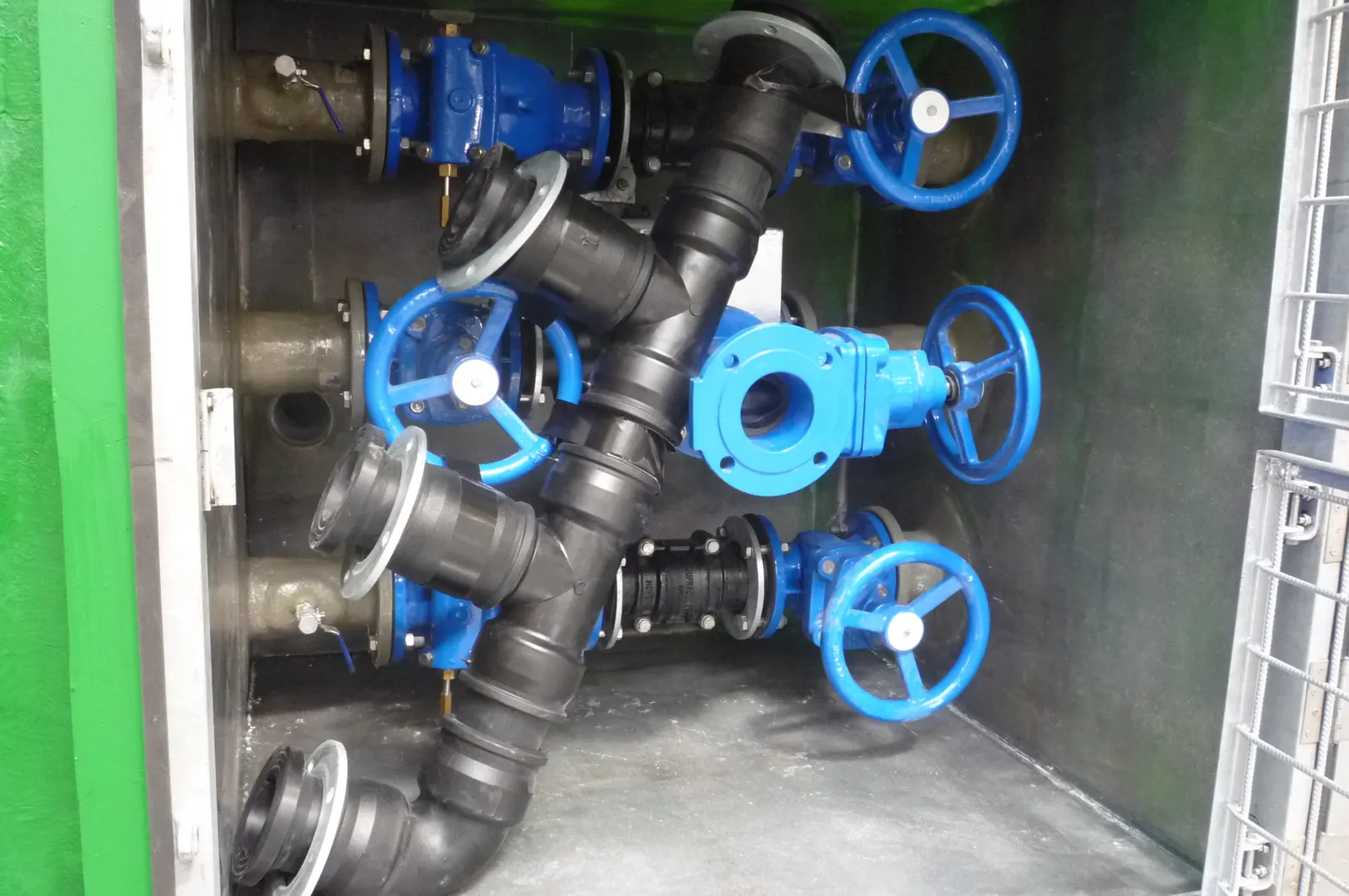
Valve pits protect pipes and valves from the damage and corrosion that can happen when they are buried directly in the ground, and protect above-ground pipework from vandalism. A valve pit can be installed with a stand-alone wet well where transport limits rule out taking a combo pump station to site. Options include:
- Cast iron or bronze valves
- Scour lines, if required
- Bypass lines, if required
- Dismantling joints for valve removal
Macerators
Macerators are often used in sewage systems to break solids into smaller pieces by grinding or blending, before the contents are pumped on. At Sydney International Airport Pier B we supplied a wet well, valve pit and macerator combo packaged pump station.
Manholes (access chambers)
Manholes bring several wastewater sources into a single chamber with a single outlet. In gravity pipelines they can also provide a change in direction or grade. A Mullaly FRP manhole can be a cost-effective choice where:
- Manholes are being replaced in built-up areas, so a quick installation is critical
- Excavation is restricted, and an FRP manhole can drop into a tight hole
- The manhole is deep, which makes in-situ concrete or several precast segments hard to build
Other benefits of a Mullaly FRP manhole:
- Resists penetration by vegetation, which lowers long-term maintenance
- Smooth internal channels stop solids building up in the chamber
- Lengths to suit site conditions, up to 14m
- Suitable for connection to an offline storage facility
- Watertight connections for inlets and outlets
Sizes and specifications
Standard models
Model range from the Mullaly FRP pump station technical data sheet (TD_TDS_020). Larger and deeper units are engineered to project.
Design and drawings
Each Mullaly pump station is designed as a stand-alone unit for the internal and external loads on its site, by a registered practising composite engineer. Flotation is countered by external ballast, using the engineer-prepared ballast calculations supplied with the installation instructions. Any load on the roof is taken by a reinforced concrete slab spanning the station.
Before final design, we supply CAD fabrication drawings for your approval. They show the layout, a description and the location of every fitting and connection, and all levels. A detailed specification for the fit-out pipework is available on request.
The station is then made in one piece in the factory and fitted out to the approved drawings, so it arrives on site ready for placement.
Advantages of a fibreglass pump station
WSAA appraised
PA 1020 Issue 4, current to 2031. Designed to WSA 04-2022, the Sewage Pumping Station Code of Australia.
No coatings or liners
Vinyl ester resin resists the corrosive gases in enclosed wastewater environments, so surfaces and fittings need no sealing or coating.
Watertight
One piece, solid wall from top to bottom. No joints between segments and no sealants applied on site.
Less confined space entry
Fitted out in the factory, so there is less need to enter the station or valve pit as a confined space.
Quick to install
In most cases set and backfilled within 1 to 2 days of delivery.
Low maintenance
Smooth walls reduce scum build-up and resist abrasion from suspended grit. Design life is 100 years.
How it's installed
1
Delivered fitted out
The pump station arrives in one piece with pipework, valves, pedestals and guide rails in place.
2
Lifted into the excavation
It is craned straight into the prepared hole, wet or dry.
3
Ballast and backfill
Ballast is placed to the engineer-prepared calculations, then the hole is backfilled. In most cases this is done within 1 to 2 days of delivery.
4
Connect pumps and power
The crew connects the external pipework and electrical work and installs the pumps.
Downloads
For CAD drawings, ballast calculations or help choosing a pump station, contact our team. More documents are in the resource centre.
Pump station photos
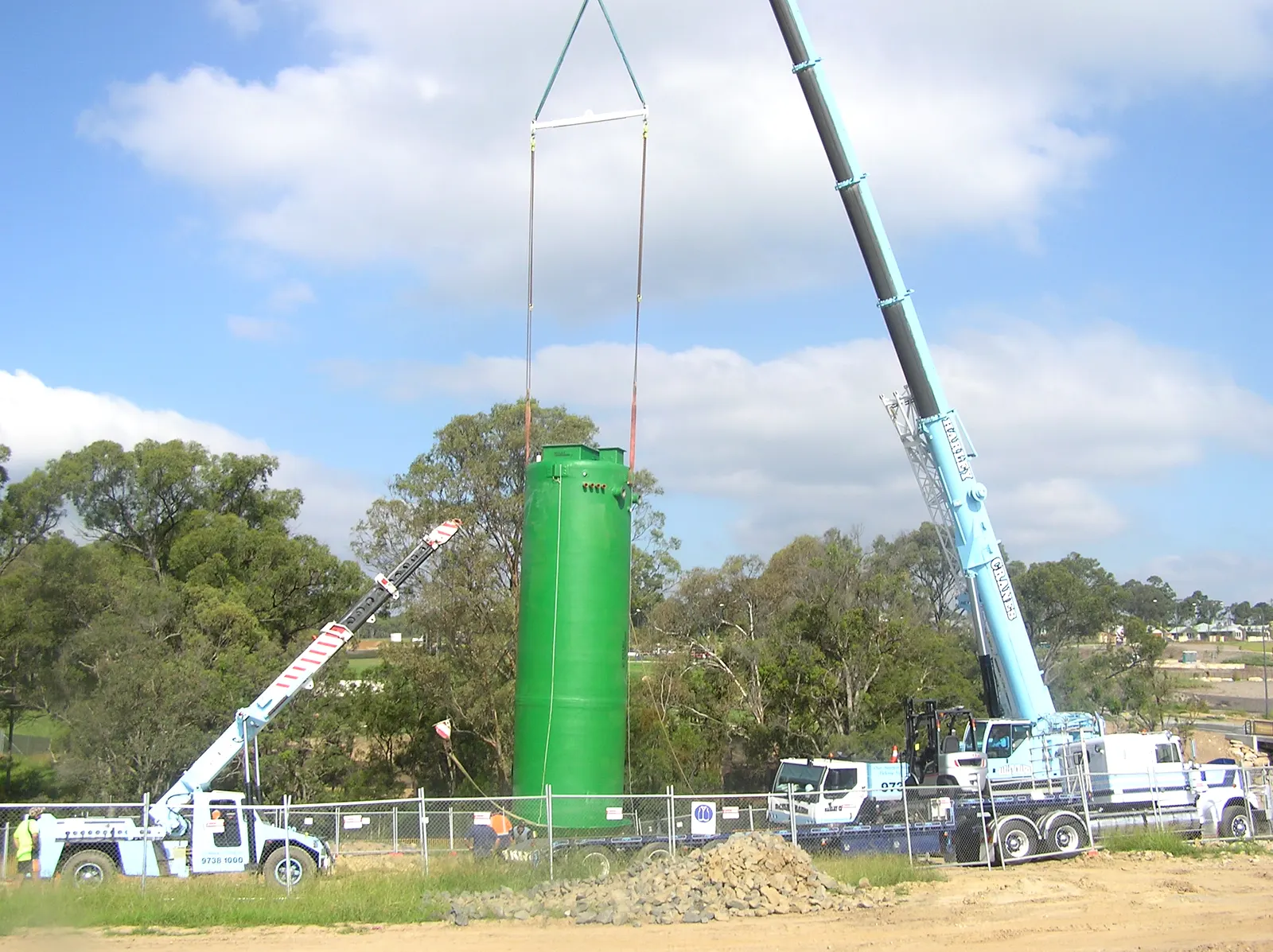
Wet well installation, Wilton NSW, 2008
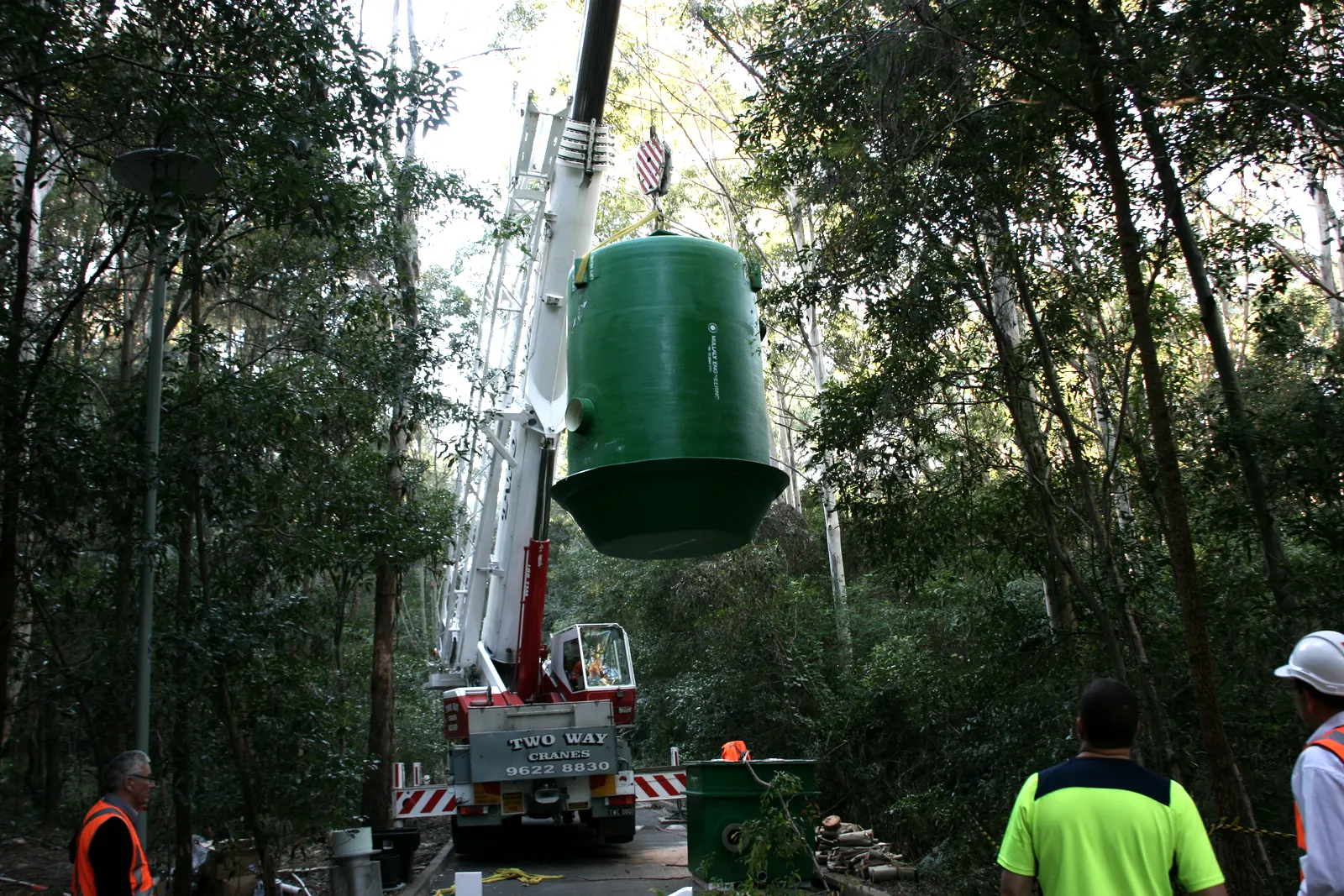
Triple M IBM pump station install, 2012
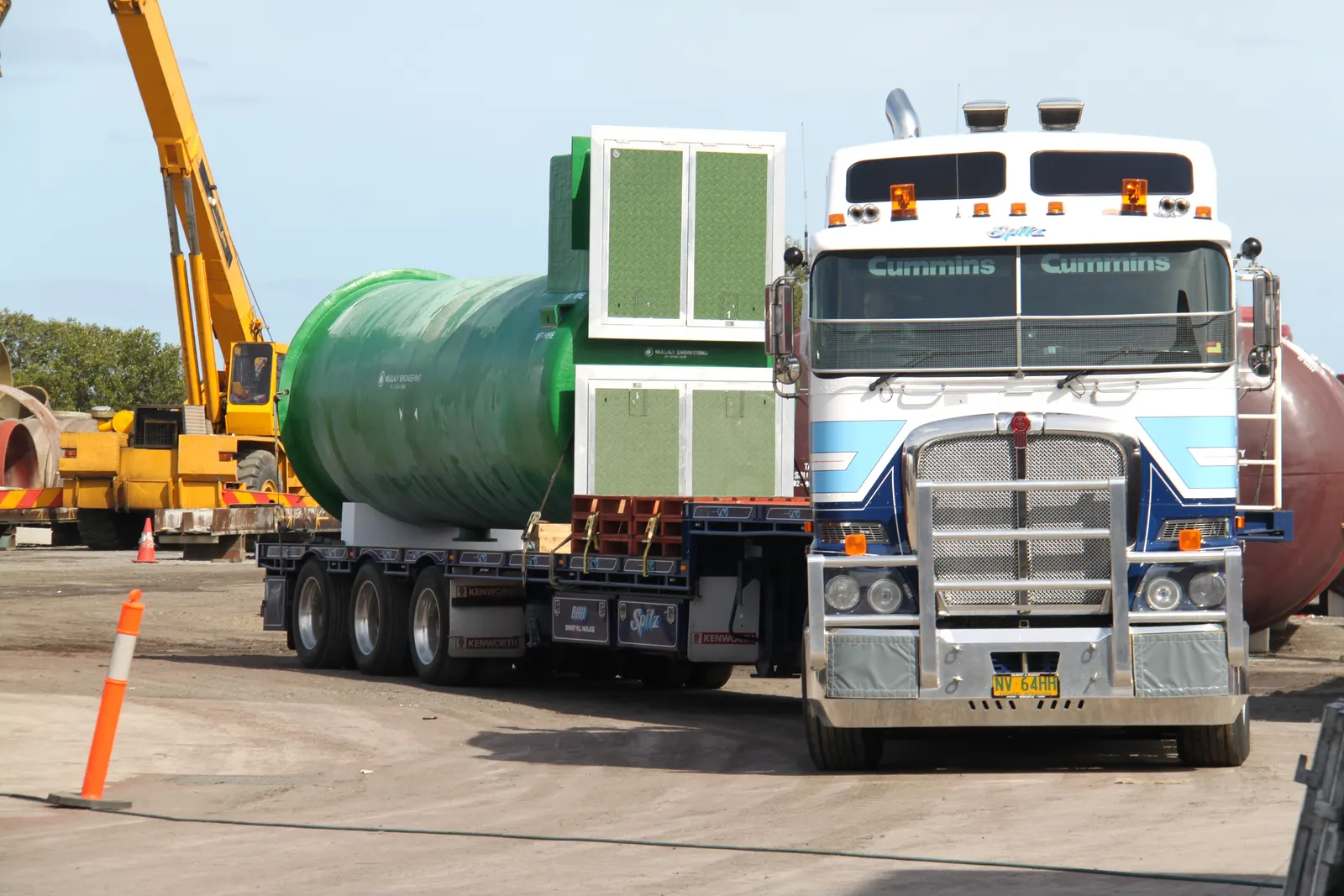
Cairns R3 pump station dispatch, 2014
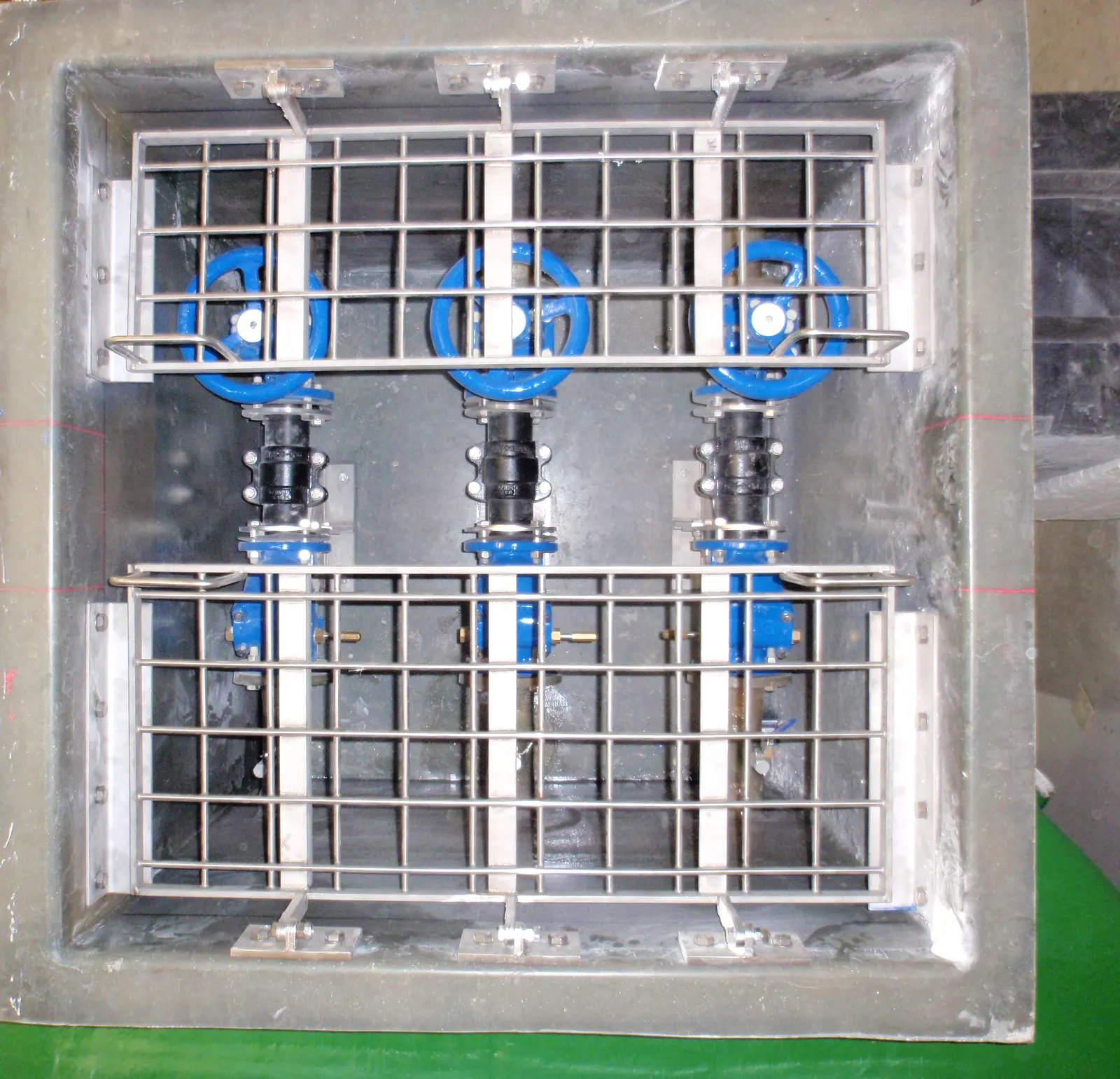
Valve chamber, Sydney Airport job, 2011
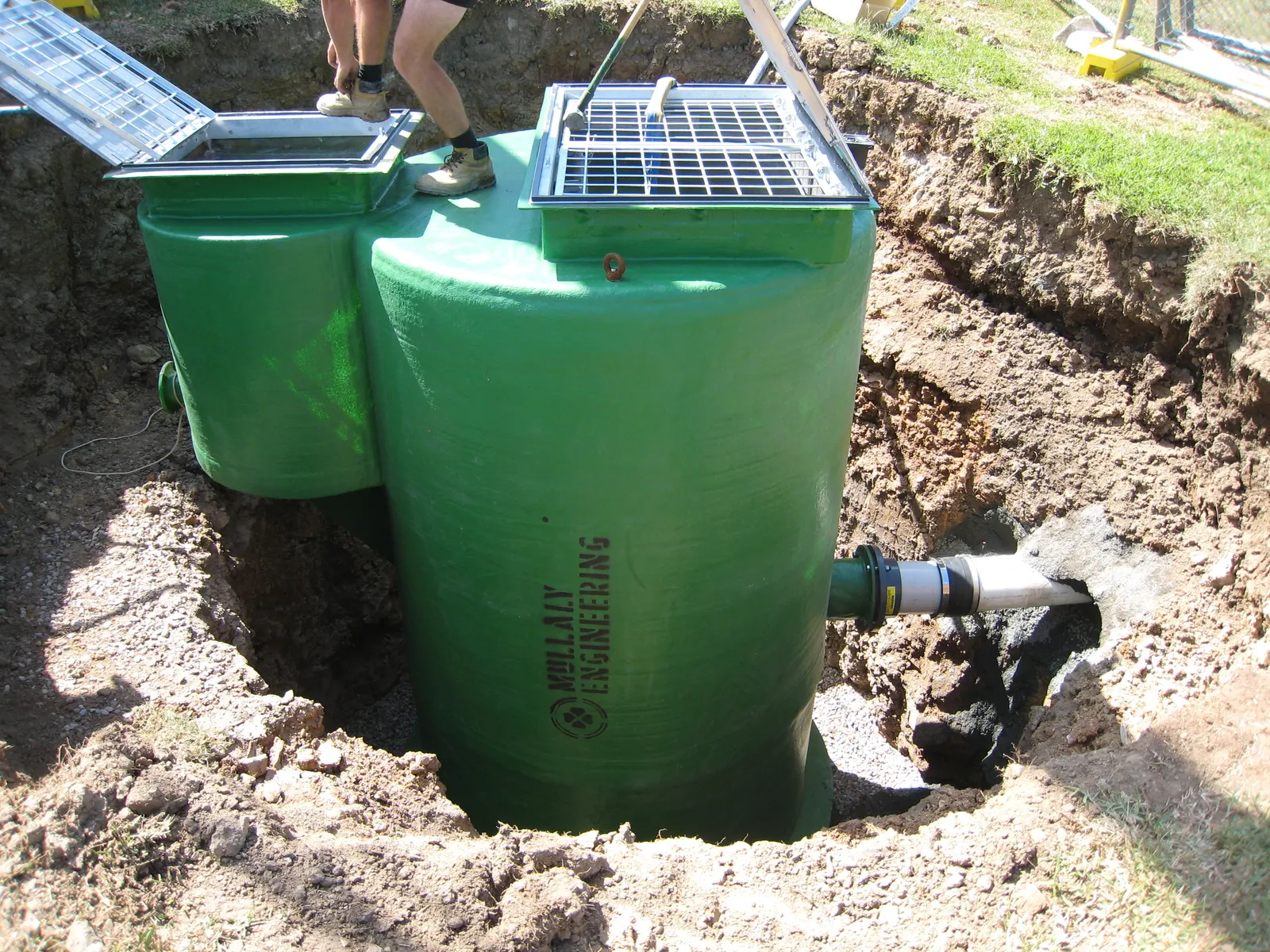
Bingara Estate, Wilton NSW, 2008
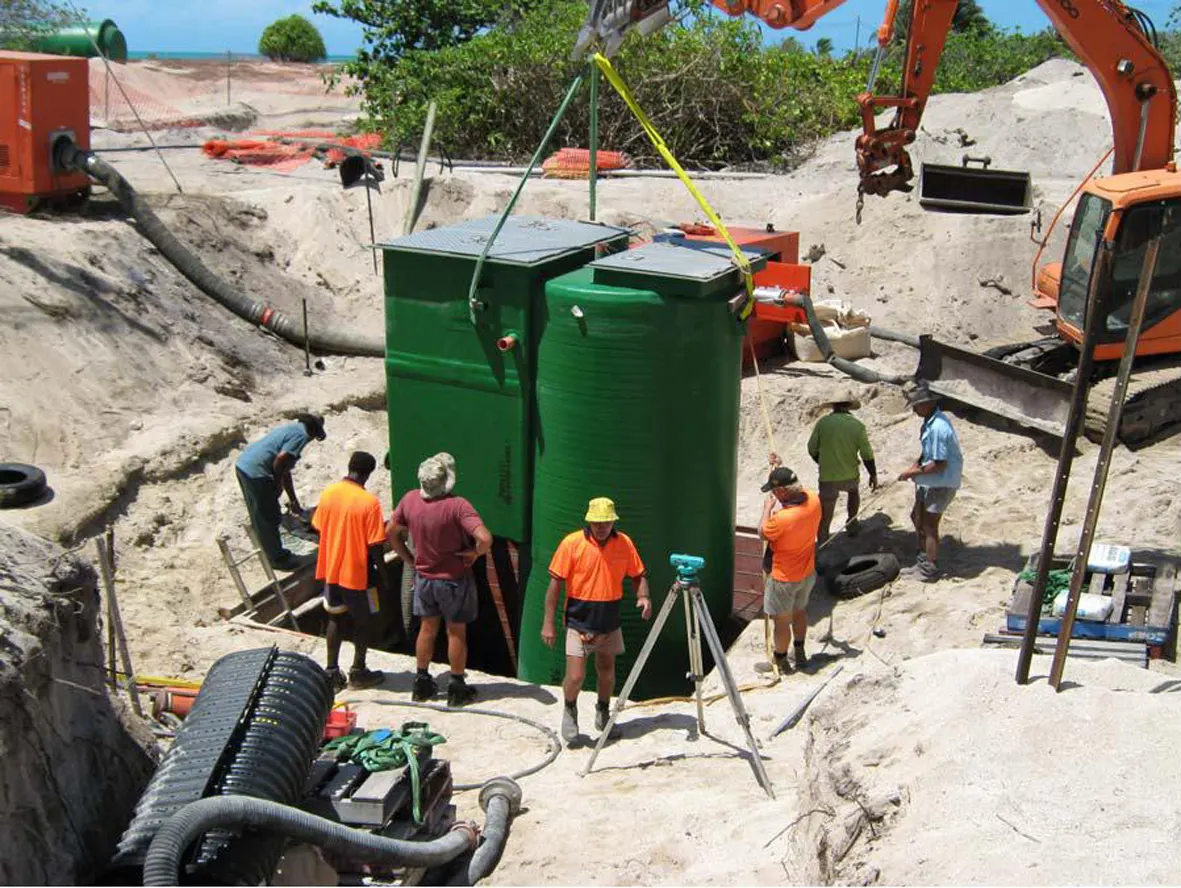
Warraber Island, Torres Strait
Where we've supplied pump stations
Mullaly pump stations are made at our factory in Tomago NSW and trucked to site in one piece. These are some of the pump stations we have supplied around Australia. Queensland and Northern Territory projects are supplied through our distribution partner, Professional Pump Services & Irrigation.
Queensland
- North Queensland Stadium, Townsville (2020): a fitted-out 3m diameter, 6.2m deep wet well and valve pit combo, with a Mullaly FRP emergency storage tank
- Innes Estate, Townsville (2007): a 4.0m diameter, 8.5m deep wet well and a separate valve pit in sandy ground next to a creek
- Badu Island, Torres Strait (2010): a fibreglass pump station for a remote island site
- Also Warraber Island in the Torres Strait, the Cairns R3 pump station (2014) and Stone Drive, Mackay (2013)
New South Wales
- Sydney Airport waste dump pump station (2019): a fitted-out 3.0m diameter, 5.0m deep combo on reclaimed land, levelled and ready for backfill in under an hour
- Sydney International Airport Pier B (2010): a wet well, valve pit and macerator combo with two 85kL overflow tanks, under an aircraft parking bay
- Also Bingara Estate, Wilton (2008)
Northern Territory
- Ramingining (1999): a pump station for a remote Arnhem Land community, 560km east of Darwin, still in near perfect condition 20 years on
Western Australia
- Sino Iron Red River accommodation village, near Karratha (2010): two fitted-out wet well and valve pit combos for a mine accommodation village, installed in under a week
Pump station projects
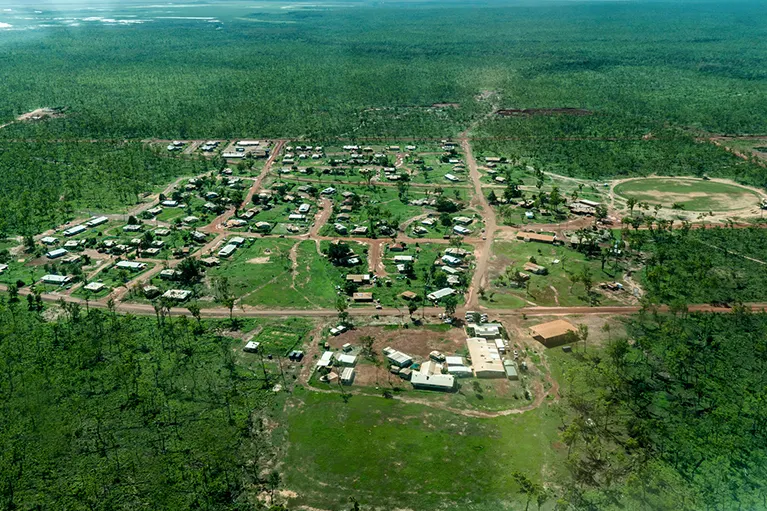
Ramingining Sewage Upgrade
A pump station for a remote Arnhem Land community, still in near perfect condition 20 years later.

Sydney Airport Waste Dump Pump Station
A 3.0m dia x 5.0m deep combo on reclaimed land, levelled and ready for backfill in under an hour.

North Queensland Stadium
A 3m diameter, 6.2m deep wet well and valve pit combo, supplied fully fitted out for a busy stadium site.
Frequently asked questions
What is a fibreglass (FRP) pump station?
A Mullaly fibreglass pump station is a wet well, often with an integral valve chamber, made in one piece from FRP (fibre reinforced plastic) to your project specification. It is delivered pre-packaged and ready for placement, with the pedestals, guide rails and pipework fitted to the approved project drawings.
What sizes do Mullaly pump stations come in?
The standard diameters are 1.2, 1.8, 2.0, 2.1, 2.5, 3.0 and 3.75m, from 2m to 14m deep. Deeper pump stations are available on request, and larger units are engineered to project, such as the 4.0m diameter, 8.5m deep wet well for Innes Estate in Townsville.
What is a combo pump station?
A combo has the wet well and valve pit built as one unit, and most projects suit one. It shortens excavation and needs less space in the overall design, and because the two are one structure there is no differential settlement between them. A separate wet well and valve pit are used where a larger diameter is needed or transport limits rule out taking a combo to site.
Are Mullaly pump stations WSAA appraised?
Yes. Mullaly FRP sewage pump stations and emergency storage tanks hold WSAA product appraisal PA 1020 (Issue 4, current to 2031) and are designed to WSA 04-2022, the Sewage Pumping Station Code of Australia.
Is a fibreglass pump station an alternative to a precast pump station?
Yes. A precast concrete pump station is made in sections that are joined and sealed on site. A Mullaly FRP pump station is made in one piece in the factory and arrives fitted out, ready to lift into the hole. Its vinyl ester resin resists the corrosive chemicals in sewage that attack concrete, so no internal coating or liner is needed.
Where have Mullaly pump stations been installed?
In Queensland, New South Wales, the Northern Territory and Western Australia, from North Queensland Stadium and Innes Estate in Townsville and Badu Island in the Torres Strait, to Sydney Airport, Ramingining in Arnhem Land and the Sino Iron accommodation village near Karratha.
How is a fibreglass pump station installed?
It arrives in one piece and is craned into the prepared hole, wet or dry. Ballast is placed to the engineer-prepared calculations and the hole is backfilled, in most cases within 1 to 2 days of delivery. The crew then connects the external pipework and electrical work and installs the pumps.
What is the design life and warranty?
Mullaly pump stations have a 100-year design life and a 30-year corrosion warranty. The warranty applies to pump stations installed according to the Mullaly installation instructions.
Download the pump station brochure
Enter your email and the brochure opens straight away. We will also email you the link.
Calculators and tools
Pump station spec builder
Answer a few questions for a starting spec to send us.
Wet well sizing
Cycle volume and emergency storage for each standard diameter.
Pump station whole-of-life cost
Compare a fibreglass and a concrete station over the life you choose.
Sewage overflow cost
What a pump outage would overflow, and the storage to hold it.
Request a quote
Send us your specification or drawings and our team will come back with a design and quote.
Or call 02 4964 8270 or email sales@mullaly.com.au